
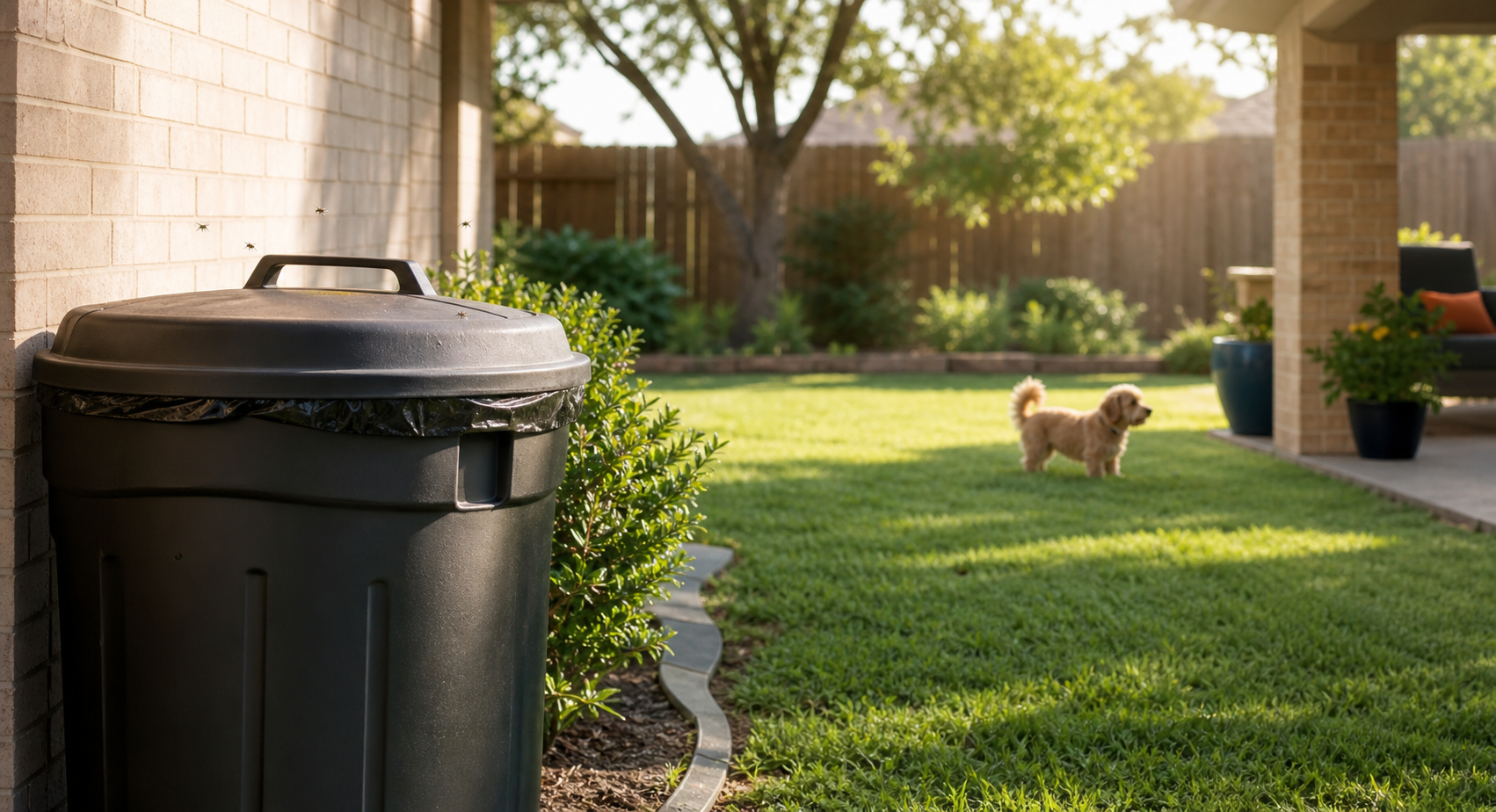
Flies are one of the fastest ways a backyard can stop feeling clean in the summer. You might not notice the problem after one missed pickup, but once North Texas heat settles in, dog waste, trash-bin odor, moisture, and shaded fence lines can turn a normal yard into a fly magnet.
The good news is that fly control does not have to be complicated. For most dog owners, the biggest improvement comes from staying ahead of waste buildup, keeping bagged waste contained, and adding odor control when the yard or trash area starts holding smell.
Why flies get worse in summer
Warm weather speeds everything up. Dog waste breaks down faster, odors release faster, and flies find the source faster. A pile that might be easy to ignore in cooler weather can become noticeable quickly when the afternoon temperature climbs.
Flies are attracted to organic material and moisture. That means the obvious source is dog waste in the grass, but the less obvious sources matter too: trash cans, bagged waste sitting too long in the heat, damp corners near the fence, and yard areas where dogs use the same spot repeatedly.
Start with waste removal, not sprays
Sprays and traps can help around the edges, but they cannot solve the main problem if waste is still sitting in the yard. The most effective first step is simple: remove visible waste consistently before it has time to bake into the lawn and attract pests.
For many homes, weekly cleanup is the practical baseline during summer. Multi-dog yards, smaller yards, turf areas, or heavy-use dog runs may need more attention because waste concentrates in fewer spots.
Do not let the trash can become the second problem
Even after the yard is scooped, bagged waste can create odor if the trash can sits in direct sun. Keep lids closed, use durable bags, and avoid letting loose waste or torn bags collect at the bottom of the bin. If possible, move the bin to a shaded area until pickup day.
If flies gather around the trash area, rinse the bin when needed and make sure bags are tied before they go inside. Waste haul-away can also be useful for homeowners who do not want bagged dog waste sitting on-site during the hottest part of the year.
Use deodorizer when odor is pulling flies back
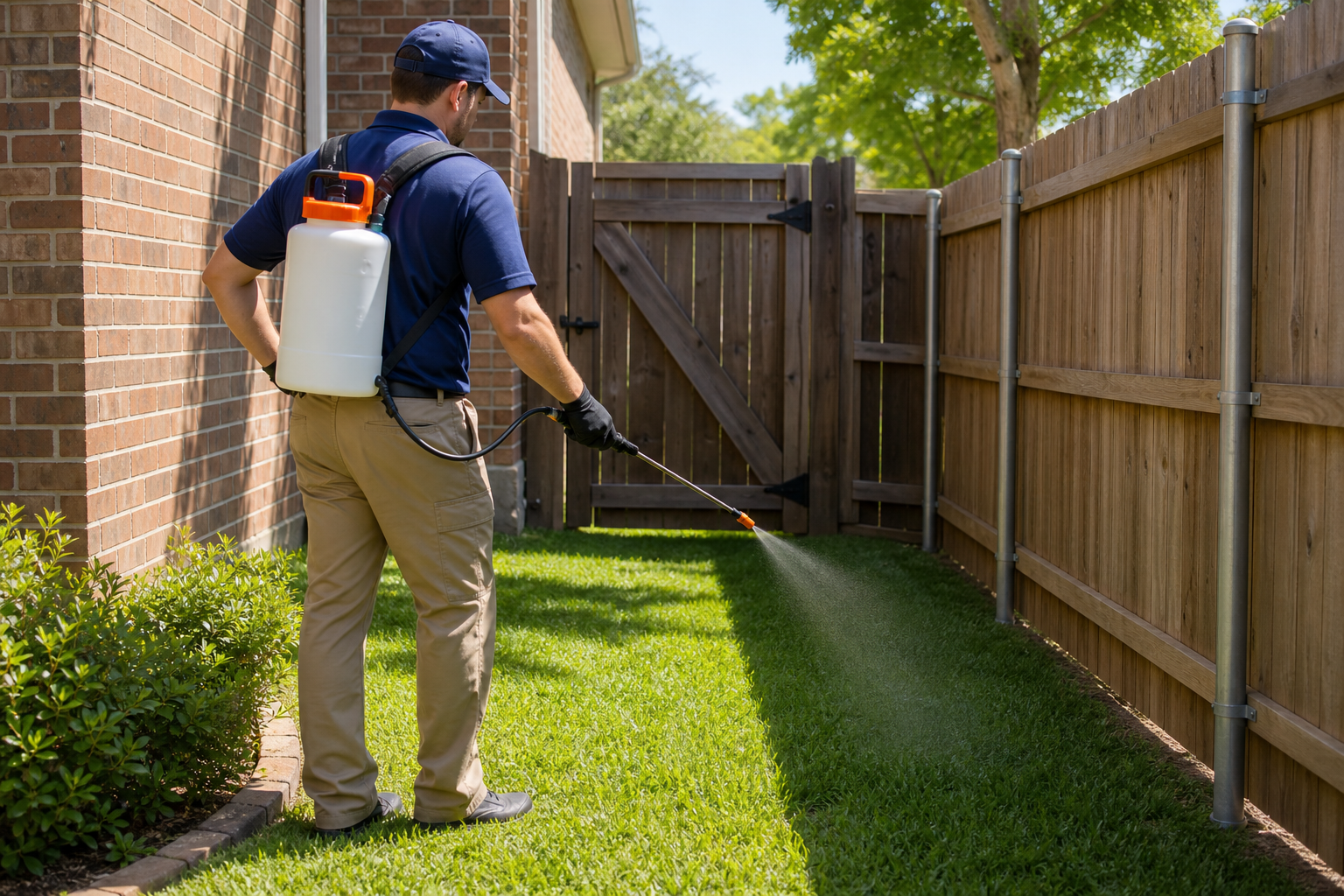
Flies often return to the same areas because odor remains after the visible mess is gone. That is where deodorizer can help. It is not a replacement for scooping, but it can be a useful finishing step after cleanup, especially near patios, turf, side yards, and dog runs.
For high-use areas, a sanitizer plus deodorizer combo can make sense when the goal is a cleaner, fresher finish after waste has been removed. The order matters: scoop first, then treat the odor-prone areas.
Reduce the conditions flies like
Small yard habits can make a difference. Keep grass trimmed enough that waste is easier to see. Fix standing water where possible. Do not leave pet food outside. Keep outdoor trash sealed. Watch the areas near gates, fence corners, and patio edges where dogs tend to repeat the same routine.
None of these steps need to be dramatic. The goal is consistency. Flies become harder to manage when cleanup turns into an occasional reset instead of a normal rhythm.
When it is time to bring in help
If you are dealing with flies every week, the yard is probably telling you the cleanup schedule is not keeping up with summer conditions. A recurring service can remove the main attractant before it builds up, while deodorizer or sanitizer add-ons can support the areas that hold odor.
That does not mean you need a complicated plan. Start with the cleanup frequency that fits your dogs and yard, then add odor control only where it makes sense.
A softer way to handle summer yard care
If flies are making the yard feel less usable, Rhino Scoop can help you get back to a cleaner weekly rhythm. You can check your price, see whether your address is on an active North Texas route, and start with two free weekly visits if the service is a fit.
Try Rhino Scoop risk-free and see what consistent cleanup can do for your yard.